Every month, inside most organizations, a familiar ritual takes place: the Day One onboarding program. Learning and Development teams, guided by CHROs and founders, usher a new cohort of talent into a sleek conference room to teach them the company’s culture.
The facilitator fires up a beautifully designed presentation. The slides deliver a triumphant, highly curated highlight reel. They outline the visionary founding idea, the brilliant capture of market share, the prestigious industry awards, and a pristine list of core values like “Innovation” and “Excellence.”
It is polished, professional, and entirely flawless. It is also the exact moment the organization begins to lose its soul.
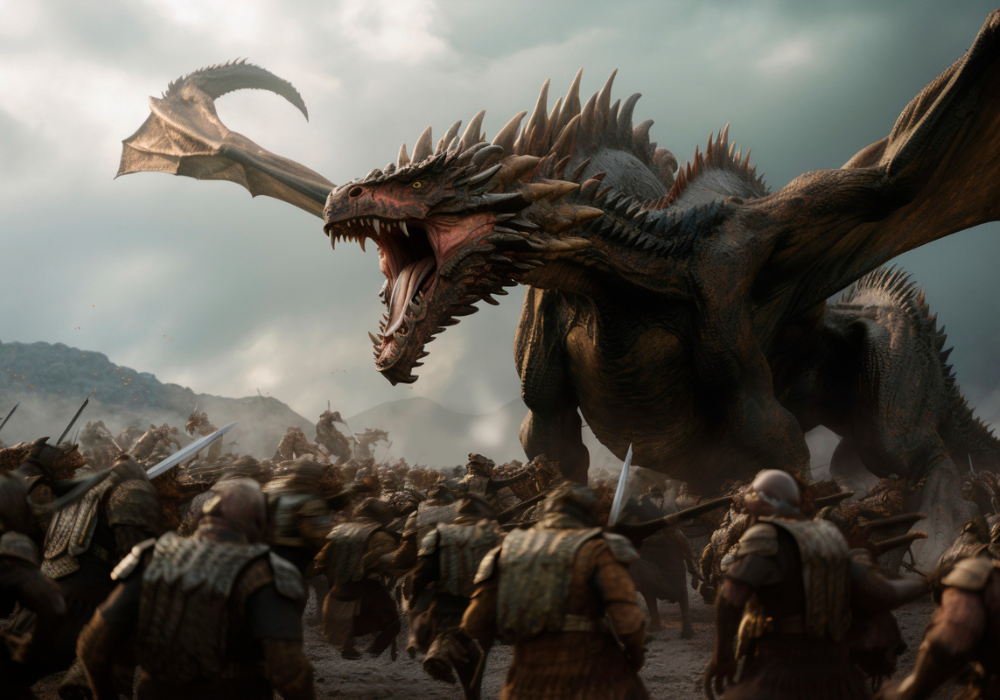
When you look closely at these onboarding sessions and training modules, something critical is always missing from the narrative. Where is the ‘dragon’?
Where is the moment the core product catastrophically failed, forcing the entire team to scrap two years of work and start over from scratch? Where is the story of the founder sitting in a windowless room, making fifty painful phone calls to apologize to angry clients just to keep the business afloat? Where is the chapter where the company almost died?
As detailed in a recent exploration of the ‘flawless history trap’, the most dangerous mistake scaling organizations make is instinctively flattening their own narrative arc. By editing out the villains, the setbacks, and the near-death experiences, companies turn an epic quest into a sterile corporate brochure. And in doing so, they rob their workforce of the one thing that actually builds loyalty: a story worth believing in.
The Broken Hero’s Journey in Corporate Culture
To understand why a sanitized history is so destructive, we must look at the mechanics of how humans process information, build allegiance, and derive meaning from their work. Corporate storytelling is not merely a marketing exercise or a public relations strategy; it is an evolutionary tool for survival and organizational alignment.
Joseph Campbell famously defined the “Hero’s Journey” (or the Monomyth) as the ultimate narrative template that transcends time, geography, and culture. In this framework, a protagonist is called to an adventure, crosses the threshold into the unknown, faces massive trials, suffers a profound crisis in the “Belly of the Whale,” and finally emerges transformed, returning with the ultimate prize.
This is the exact trajectory of every successful startup, transitioning family business, and scaling enterprise. When mapped to the corporate lifecycle, the stages are identical:
- The Call to Adventure:
The moment the founder identifies a massive problem in the market, realizes the status quo is unacceptable, and decides to build a solution. - Crossing the Threshold:
Leaving the safety of a stable corporate job, securing the first round of seed funding, or launching the beta product into a highly skeptical market. - The Road of Trials:
The grueling years of trying to find product-market fit, dealing with global supply chain collapses, hiring the wrong executives, and fending off well-funded competitors. - The Belly of the Whale (The Dark Night):
The narrative climax where all hope seems lost, a major lawsuit, a failed product launch that alienates the core user base, or a macroeconomic crisis that threatens to end the business entirely. - The Return:
The company survives, stabilizes, and emerges as an industry leader, carrying the wisdom gained from the journey and a deeply forged culture.
However, when a company matures, leadership teams tend to delete the middle of the story. They worry that talking about past instability will scare away new talent or make the current leadership team look incompetent. So, they jump straight from the Call to Adventure to the Return. They present a flawless protagonist who never had to bleed.
The Threat of the Corporate “Mary Sue”
In literature and film critique, there is a term for a character who is flawlessly perfect, faces no real challenges, possesses no meaningful flaws, and is instantly good at everything: a Mary Sue.
Audiences notoriously reject these characters. We reject them because they are boring, unrelatable, and lack humanity. A protagonist who never struggles does not earn our emotional investment, because their victories feel unearned.
Scaling companies that airbrush their history inadvertently turn themselves into corporate Mary Sues. They present an image of an enterprise that is always successful, always innovating, and always winning. But employees are not naive. They know that building a business is messy, chaotic, and frightening. When the narrative they are fed during onboarding completely contradicts the reality of building a business, skepticism takes root immediately. If the company is lying about how easy its past was, what else is it hiding about its present?
The Cost of Erasing the “Dark Night”
When an organization erases its “Dark Night”, the narrative climax where the organization was pushed to the absolute brink, it creates massive operational vulnerabilities that impact the bottom line.
The Loss of the Cultural Compass
In narrative tradition, the lore of past battles teaches the next generation how to fight. In the early days of a company, everyone was in the same room. When a crisis hits, everyone feels the panic, and everyone watches how the leadership team handles it.
Do they panic? Do they compromise their ethics to make a quick buck? Do they throw junior employees under the bus? Or do they sacrifice short-term financial gains for long-term integrity?
That shared experience becomes the lore. It becomes the unwritten standard of behavior.
Years later, when a mid-level manager faces their own climax, say, choosing between hitting a quarterly revenue target or issuing a massive refund to retain a frustrated, loyal client, they rely on that lore. But if the company has hidden its past struggles, new hires have no guide. Because leadership paints a picture of a protagonist who never fails, the workforce’s first instinct when failure looms will be to panic, hide the mistake, point fingers, or update their resumes. They simply do not know how the company behaves when its back is against the wall.
The Rise of the Transactional Workforce
Elite talent does not want to join a sterile, effortless environment. When top-tier professionals evaluate a company, they conduct deep, independent research across channels. They read employee reviews, listen to founder podcasts, and look for authenticity.
They are looking for a Call to Adventure. High performers want to solve hard problems, push their own boundaries, and slay their own dragons.
When you hand a new employee a sanitized history, you strip the company of its stakes. If there were no antagonists to defeat, the gold you won means absolutely nothing. This leads directly to a transactional workforce. Without a compelling narrative arc to anchor them to the mission, employees will treat the company as merely a stepping stone. They will not offer their discretionary effort, and they will leave the moment a competitor offers a 5% pay increase.
Rebuilding the Narrative Arc: How to Find Your Dragon
To build a resilient culture that can weather future storms, organizations must bring the plot back. True corporate storytelling requires an honest, unflinching look at the challenges that forged the company’s DNA.
So, how do leadership teams extract this lore without sounding disorganized or chaotic? By conducting a structured narrative audit.
Interview the Veterans for Friction
Do not ask your long-tenured employees to recount a timeline. Ask them to recount the friction. Sit down with the first ten employees, the founders, and the legacy executives, and ask them specific, conflict-oriented questions:
- What was the single hardest day in this company’s history?
- Tell me about a time a lower-level employee saved the company from a massive executive mistake.
- What is the one story we never tell investors, but that perfectly defines who we are behind closed doors?
- When did you almost quit, and what made you stay?
Identify the Core Antagonist
Every great corporate story needs a dragon. Was your antagonist a massive legacy corporation that tried to crush your startup? Was it a global pandemic that destroyed your supply chain? Was it a piece of legacy technology that threatened to take your platform offline? Name the antagonist clearly, so your workforce understands the magnitude of what the company overcame.
Highlight the Sacrifice
Stories resonate when the protagonist gives something up to achieve the goal. Did the founders skip paychecks? Did the engineering team work through a holiday weekend? Highlight the sacrifices made to protect the client or the product.
Embed the Story Across the Entire Employee Journey
Once these foundational stories are extracted, they must be assetized and woven into every phase of the employee lifecycle. True narrative alignment does not begin and end on Day One; it must echo throughout the entire journey to help craft a cohesive employer story for global talent.
For Founders, CHROs, and L&D professionals, this means structurally embedding your lore into the following critical touchpoints:
- Recruitment (The Call to Adventure):
Do not wait until a candidate is hired to tell them the truth about your culture. Use your careers page and recruitment marketing to explicitly name the “dragons” your company is currently fighting. When you advertise a role, frame it as a quest that requires resilience, not just a list of required software skills. This naturally filters out candidates looking for a comfortable, effortless ride and attracts the high-performers seeking a genuine challenge. - Onboarding (Crossing the Threshold):
Rebuild your Day One orientation. Before you teach a new hire how to navigate the internal intranet or submit an expense report, teach them the lore. Tell them the story of the “Dark Night of the Soul.” Let them know that the company is not perfect, that it has stumbled, but that it survives because of the resilience of its people. - Continuous L&D and Internal Comms (The Road of Trials):
Narrative cannot disappear once orientation ends. When executives stand up at quarterly town halls, they must stop relying exclusively on sterile spreadsheets. Before introducing a massive new Q3 revenue target (a new antagonist), leaders should frame the challenge by recounting a story of how the team conquered a similarly impossible target three years ago. - Performance Reviews (The Guide’s Intervention):
When managers need to course-correct an employee’s behavior, they should rely on the company’s historical lore rather than quoting a punitive HR policy. Sharing a story of a past mistake and how the company overcame it fosters psychological safety and invites the employee back into the narrative fold.
Conclusion: Embrace the Flawed Protagonist
Vulnerability in corporate storytelling does not make an executive team look weak. It makes them relatable, trustworthy protagonists.
For the leaders tasked with scaling an organization, whether you are an entrepreneur charting hyper-growth, a CHRO trying to unify a fractured culture, or an L&D professional building the next generation of talent, take a hard look at the stories you are currently telling. Look at your orientation decks, your town hall scripts, and your employer branding materials.
Are they a straight, upward-sloping line of uninterrupted success? Are they devoid of struggle, sacrifice, and stakes?
If so, the narrative is failing. It is time to tear up the flawless timeline. It is time to reintroduce the antagonist, embrace the struggle, and give your employees an epic story they can actually believe in. Because a culture that has never faced a dragon on paper will not know how to fight one in reality.
In Part 2 of this masterclass, we will explore the archetype of the “Guide,” and why an organization’s middle managers must be rigorously trained to carry this corporate lore forward to the next generation of heroes.